Translate

Subscribe via email

BADFELLAS

BADFELLAS

Released Alien from Border Crisis Arrested for Alleged Murder, Kidnapping in Texas

Wednesday, 16 July 2014

An illegal immigrant who was released by U.S. authorities with a Notice to Appear has been arrested for the alleged murder of a woman and kidnapping of children on U.S. soil. The alleged crimes occurred after the man was released. The man, Pedro Alberto Monterroso-Navas, entered the U.S. illegally with children and turned himself in to U.S. Border Patrol agents. He was processed and released, as are all illegal immigrants who come as unaccompanied minors or incomplete family units from Central America. The alien is from Honduras. The arrest was first reported by the Associated Press (AP), but Breitbart Texas has exclusively confirmed that the man was part of the Obama Administration’s catch and release policy for family groups from Central America. A U.S. Border Patrol source who spoke with Breitbart Texas on the condition of anonymity provided Breitbart Texas with the alien registration number for the man, and the event number for the man’s apprehension. He was processed in the McAllen station of the U.S. Border Patrol. The alien’s registration number is 202027386. The event number for his apprehension is MCS14061487. The “MCS” designates the McAllen station, the “1406” designates that the man was apprehended in June of 2014. A separate Border Patrol source confirmed that the man was apprehended on June 26, 2014 with two children he claimed were his own. He told U.S. authorities he had family in Metairie, Louisiana.

Read more...

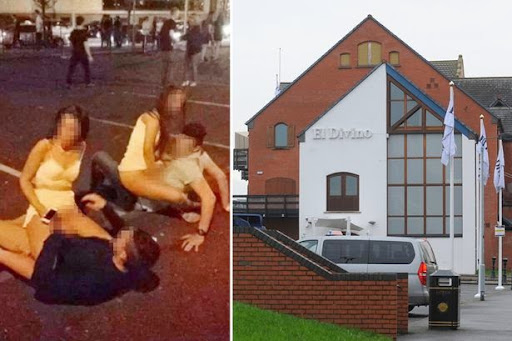
Shocking images showing two couples having sex outside nightclub sparks outrage online

This is the shocking photograph showing two couples having sex outside a nightclub. Two scantily clad girls are pictured sitting on boys’ laps in a car park outside Ed Divino in Belfast as other stunned revellers looked on. The jaw-dropping snap of the two couples, taken last Thursday, has gone viral with people posting their disgust online. One twitter post reads: “WTF is wrong with the young ones did they not learn after magaluf girl n slanegirl now another pic pops up :(.” Another posted: “People have no shame. This is traumatic.”

Read more...

El Divino nightclub, Belfast: Picture of clubbers having sex in car park posted on Twitter, Instagram and Facebook sparks outrage

A picture of two female clubbers appearing to have sex with two men in a car park outside a nightclub has sparked outrage online. The image has been shared on thousands of social media accounts after being taken outside El Divino in Belfast after a student night last Thursday. It shows the two scantily-clad women on top of the men, with other revellers milling in the background, in scenes reminiscent of the recent video of a clubber giving oral sex to men in return for a drink in Magaluf.

Read more...

British cyber-jihadist Babar Ahmad jailed in US

A British cyber-jihadist has been sentenced in a US court to 12-and-a-half years' imprisonment after admitting terrorism offences. Babar Ahmad, of Tooting, south London, had admitted conspiracy and providing material to support the Taliban. Ahmad has already spent almost 10 years in prison in the UK and US and his lawyer thinks he could be released in about seven-and-a-half months. He waived his right to an appeal as part of a plea agreement. The judge said she had to weigh the seriousness of the crime with Ahmad's good character, after reading thousands of letters of support and hearing from British prison officials who described him as an exemplary prisoner. The court in New Haven, Connecticut, handed down a sentence of 150 months, half of the 25 years the prosecution was seeking. Ahmad is expected to carry out the remainder of his sentence in New York's Metropolitan Correctional Center.

Read more...

British cyber-jihadist Babar Ahmad jailed in US

A British cyber-jihadist has been sentenced in a US court to 12-and-a-half years' imprisonment after admitting terrorism offences. Babar Ahmad, of Tooting, south London, had admitted conspiracy and providing material to support the Taliban. Ahmad has already spent almost 10 years in prison in the UK and US and his lawyer thinks he could be released in about seven-and-a-half months. He waived his right to an appeal as part of a plea agreement. The judge said she had to weigh the seriousness of the crime with Ahmad's good character, after reading thousands of letters of support and hearing from British prison officials who described him as an exemplary prisoner. The court in New Haven, Connecticut, handed down a sentence of 150 months, half of the 25 years the prosecution was seeking. Ahmad is expected to carry out the remainder of his sentence in New York's Metropolitan Correctional Center.

Read more...

Two Hells Angels associates sentenced as part of Project Flatlined

Two more Winnipeg men were sent packing to prison Monday for their differing roles in a “sophisticated and well-organized” Manitoba Hells Angels-led drug operation which was ultimately smashed up in a covert police sting. Jonathan Stewart, 32, and Brian Chesney were sentenced in back-to-back hearings and escorted from Judge Robert Heinrichs’s courtroom to begin serving their time after being arrested early last year in Project Flatlined. Stewart, described by the Crown as a “trusted courier” for a crack cocaine ring in the Elmwood neighbourhood orchestrated by top members of the Hells Angels and support crew, Redlined, received a sentence of 57 months on criminal organization and conspiracy charges. Stewart was not a member of either gang but knew key players from growing up in Elmwood, court heard. He assisted the two top-ranking Redlined members in various ways, including preparing crack cocaine for its eventual distribution to users. “This organization would not have operated as well as it did without the assistance of Mr. Stewart,” said federal Crown attorney Geoff Bayly, who named Stewart’s key contacts as Brendin Wall and Justin MacLeod. Chesney, 35, was handed a term of 45 months for cocaine-trafficking and committing acts for the benefit of a criminal organization. Chesney was the roommate of Redlined associate Thomas Barnecki and was caught making crack deliveries to undercover cops, as well as renting a new “stash house” for the crime ring after it was discovered police had infiltrated another by placing a video camera inside. Bayly detailed for the court the sophisticated setup of the cocaine-slinging ring, which he said was headed up by Hells Angel Dale Sweeney. The ring had a defined management structure, production cell and street-distribution network, Bayly said. Police have previously said two cellphones used by the operation rang 530 times a day on average over the 10 months cops were secretly monitoring it between May 1, 2011 and late February 2012. The conservative estimate of sales in that time was said to be $1.5 million, police have said. The cop estimate is based on halving the total number of calls traced to the phones over the life of the investigation (159,154) and assumes only a single $20 rock of crack was sold as a result, police say. Police believe the volume of sales was likely much higher. Stewart had no prior criminal record and was supported by a large number of ashen-faced family and friends in court. Heinrichs was told he suffers with schizophrenia. His mental illness combined with drug use caused his life to go “off the rails,” lawyer Aaron Seib said. Chesney, a recently married father of four, was also supported in court by family.

Read more...

LIVING IN A FASCIST STATE: Mentally ill people need to be helped, not hounded by the work Roaches

Tuesday, 8 July 2014

LIVING IN A FASCIST STATE: Mentally ill people need to be helped, not hounded


Neglect of the mentally ill is bad enough, but now consider how the Department for Work and Pensions deliberately torments them. I just met a jobcentre manager. It had to be in secret, in a Midlands hotel, several train stops away from where she works. She told me how the sick are treated and what harsh targets she is under to push them off benefits. A high proportion on employment and support allowance have mental illnesses or learning difficulties. The department denies there are targets, but she showed me a printed sheet of what are called "spinning plates", red for missed, green for hit. They just missed their 50.5% target for "off flows", getting people off ESA. They have been told to "disrupt and upset" them – in other words, bullying. That's officially described, in Orwellian fashion, as "offering further support". As all ESA claimants approach the target deadline of 65 weeks on benefits – advisers are told to report them all to the fraud department for maximum pressure. In this manager's area 16% are "sanctioned" or cut off benefits.

Of course it's not written down anywhere, but it's in the development plans of individual advisers or "work coaches". Managers repeatedly question them on why more people haven't been sanctioned. Letters are sent to the vulnerable who don't legally have to come in, but in such ambiguous wording that they look like an order to attend. Tricks are played: those ending their contributory entitlement to a year on ESA need to fill in a form for income-based ESA. But jobcentres are forbidden to stock those forms. These ill people's benefits are suddenly stopped without explanation: if they call, they're told to collect a form from the jobcentre, which doesn't stock them either. If someone calls to query an appointment they are told they will be sanctioned if they don't turn up, whatever. She said: "The DWP's hope is they won't pursue the claim."

Good advisers genuinely try to help the mentally ill left marooned on sickness benefit for years. The manager spoke of a woman with acute agoraphobia who hadn't left home for 20 years: "With tiny steps, we were getting her out, helping her see how her life could be better – a long process." But here's another perversity: if someone passes the 65-week deadline, they are abandoned. All further help is a dead loss to "spinning plates" success rates. That woman was sent back to her life of isolation: she certainly wasn't referred for CBT. For all this bullying, the work programme finds few jobs for those on ESA.

Failing to treat the mentally ill is bad enough, but this is maltreatment. There has been much outrage about lack of kindness and care in hospitals. Neglect of mental patients is every bit as bad, but deliberate cruelty by the DWP defies any concern for the wellbeing for the most vulnerable, let alone "parity of esteem".

Read more...

Griselda Blanco, gunned down in Medellin, Colombia Two armed riders pulled up to Blanco as she was leaving a butcher shop in her hometown

Tuesday, 4 September 2012

Florida Department of Corrections

Griselda Blanco in 2004.

The convicted Colombian drug smuggler known as the “Godmother of Cocaine,” Griselda Blanco, 69, was gunned down by a motorcycle-riding assassin in Medellin, Colombian national police confirmed late Monday, according to the Miami Herald.

Blanco spent nearly 20 years in prison in the United States for drug trafficking and three murders before being deported to Colombia in 2004, the Herald reported.

Two armed riders pulled up to Blanco as she was leaving a butcher shop in her hometown, and one shot her twice in the head, the Herald reported, citing a report in El Colombiano newspaper.

Family members said Blanco had cut her ties to organized crime after returning to her country, the BBC reported. Police said they were investigating the motive.

Blanco was one of the first to engage in large-scale smuggling of cocaine into the United States from Colombia and set up many of the routes used by the Medellin cartel after she was sentenced in the United States in 1985, the BBC reported.

Investigators told the Herald that they estimate conservatively that Blanco was behind about 40 slayings. She was convicted in connection with three murders: Arranging the killing of two South Miami drug dealers who had not paid for a delivery, and ordering the assassination of a former enforcer for her organization, an operation that resulted in the death of the target’s 2-year-old son, the Herald reported.

Three of Blanco’s husbands were killed in violence related to drugs, the Herald reported, and one of her sons was named Michael Corleone, a reference to “The Godfather” movies.

Blanco is credited with originating motorcycle assassinations, the Herald reported.

“This is classic live-by-the-sword, die-by-the-sword,” filmmaker Billy Corben, who with Alfred Spellman made two “Cocaine Cowboys” documentaries, told the Herald. “Or in this case, live-by-the-motorcycle-assassin, die-by-the-motorcycle assassin.”

Read more...

Amber Gold affair is one of the biggest financial scandals to hit Poland since the fall of communism in 1989.

Tuesday, 28 August 2012

It was pretty much all the money Bozena Oracz had after a working life as an accountant: the equivalent of $15,000. She placed it in a fund investing in gold, with the hope of paying for her daughter's studies and getting treatment for a bad knee.

Those dreams were dashed when she discovered she had fallen victim to an elaborate fraud scheme that has left thousands of Poles, many of them elderly, facing financial ruin.

The so-called Amber Gold affair is one of the biggest financial scandals to hit Poland since the fall of communism in 1989. The extent of wrongdoing is still murky, but it seems to have some elements of a pyramid scheme, meaning the financial institutionused funds from new clients to pay off older clients rather than investing them.

Consumed with anger and desperation, 58-year-old Oracz traveled last week from a small town near Warsaw to a law firm in the capital to consider whether, after losing 50,000 zlotys, she should risk another 3,000 zlotys ($920; €730) on the fee to join a class-action lawsuit seeking to recover some of the losses.

"This was a lot of money to me — it was my savings," Oracz said, fighting back tears. Now retired and living on a small pension, she sees no way of building another nest egg. "My pension barely covers my needs," she said.

The affair has raised questions about the effectiveness of Poland's justice system and government because authorities failed to act against the scheme despite red flags from regulators and the criminal record of its young owner. Scrutiny has also focused on the prime minister due to business dealings his son had with those running the scheme. The scandal has even touched democracy icon Lech Walesa, who fears it could tarnish his good name.

Prosecutors say investors lost about 163 million zlotys ($50 million; €40 million), a number that has been mounting as more and more victims come forward. Any law suits could take care years to go through the courts, with no guarantee of their outcome.

"People are desperate," said Pawel Borowski, a lawyer preparing the class-action suit that Oracz is considering joining. "In most cases the clients lost life savings or sold family properties to make investments."

The financial institution, Amber Gold, promised guaranteed returns of 10 to 14 percent a year for what it claimed were investments in gold. Many of its clients were older Poles who grew up under communism and lacked the savvy to question how a financial firm could guarantee such a high return on a commodity whose value fluctuates on the international market. The promised returns compared well to the 3 to 5 percent interest offered by banks on savings accounts — earnings essentially wiped out by the country's 4 percent inflation rate.

"These were people with a low level of financial education," said Piotr Bujak, the chief economist for Poland at Nordea Markets. "They think it's still like in the old times, where everything was guaranteed by the state. They underestimated the risk."

Amber Gold launched in 2009, opening branches in city centers alongside respected banks, with white leather sofas and other sleek touches that conveyed sophistication and respectability. It bombarded Poles with convincing advertisements. Some early investors got out with their expected gains, adding to the fund's credibility.

The company, based in Gdansk, capitalized on gold's allure while playing on people's anxieties in unpredictable financial times. "We are dealing with a loss of confidence in the entire financial system and an urgent need for safe investments," one ad said. "The environment for gold is perfect."

Amber Gold drew in 50,000 investors over its three years of operation, though the company's founder, Marcin Plichta, said there were only about 7,000 at the time of liquidation.

Soon after Amber Gold began operations, the Polish Financial Supervision Authority put it on a "black list" of institutions that operate like banks without authorization. There are 17 other such black-listed institutions in operation, but the regulators lack the authority to shut them down. This has sparked a debate in the government and news media about whether courts should be more aggressive in intervening.

According to prosecutors, the company did use some of its money to invest in at least one legitimate business: It was the main investor in budget airline OLT Express. It was this investment that brought Amber Gold down — when the airline filed for bankruptcy, Amber Gold entered liquidation and its scheme of investments unraveled. Its bank accounts were blocked and it was unable to return the money of thousands of its customers.

Plichta was charged this month with six counts of criminal misconduct.

Prime Minister Donald Tusk's center-right government went into damage-control mode when it emerged that the leader's son, Michal Tusk, had done PR work for the airline. Tusk said he had warned his son against doing business with Plichta but that ultimately he son makes his own decisions.

Leszek Miller, the head of the opposition Democratic Left Alliance, asked how Tusk could warn his son against involvement in the airline but not warn the thousands of Poles who invested in the fund. Miller has called for a parliamentary inquiry into the scandal.

Public discontent is also centering on the justice system because Plichta, 28, has past convictions for fraud, and many Poles are asking why authorities — aware of his criminal record — didn't stop him sooner. Born Marcin Stefanski, he took his wife's last name to distance himself from his past crimes.

The country's top prosecutor, Andrzej Seremet, admitted Monday that prosecutors were negligent in failing to heed multiple warnings since 2009 about Amber Gold from the financial supervisory body. He announced personnel changes in the office he blamed for mistakes.

The affair also has an unlikely connection to the Solidarity leader and former president, Lech Walesa, because an Oscar-winning director, Andrzej Wajda, was relying on money from Amber Gold to produce a film about Walesa's struggle in the 1980s.

Walesa came out publicly to make clear he is not involved in any way, saying he doesn't want his name "dirtied."

Many of the unlucky investors are not only furious but wracked by shame and guilt.

Engineer Andrzej Malinowski, 61, put three months of salary — 25,000 zlotys ($7,660; €6,100) — into Amber Gold. He made the investment without consulting with his wife, sensing that there was some risk and that she would not have agreed.

Now he is so shaken and embarrassed that he doesn't want to talk about it, leaving his wife, Danuta Malinowska, to help unravel the mess.

"He saw that gold was going higher and higher so he believed that maybe it would be a good deal," Malinowska said. "Now he has so much guilt that I am trying to help — contacting the lawyer, filling in the forms, writing to the prosecutors. But the justice system is very ineffective. I don't believe we will be getting any of this money back."

Read more...

Miguel Angel Trevino Morales new leader is emerging at the head of one of Mexico's most feared drug cartels.

Monday, 27 August 2012

  • Mexico Drug War Zetas_Plan.jpg

    This undated image taken from the Mexican Attorney General's Office rewards program website on Aug. 23, 2012, shows the alleged leader of Zetas drug cartel, Miguel Angel Trevino Morales, alias âZ-40.â (AP Photo/Mexican Attorney General's Office website)

Mexico's Violent Zetas Cartel Sees New Leader Miguel Angel Trevino Morales A split in the leadership of Mexico's violent Zetas cartel has led to the rise of Miguel Angel Trevino Morales, a man so feared that one rival has called for a grand alliance to confront a gang chief blamed for a new round of bloodshed in the country's once relatively tranquil central states.

Trevino, a former cartel enforcer who apparently has seized leadership of the gang from Zetas founder Heriberto Lazcano Lazcano, is described by lawmen and competing drug capos as a brutal assassin who favors getting rid of foes by stuffing them into oil drums, dousing them with gasoline and setting them on fire, a practice known as a "guiso," or "cook-out".

Law enforcement officials confirm that Trevino appears to have taken effective control of the Zetas, the hemisphere's most violent criminal organization, which has been blamed for a large share of the tens of thousands of deaths in Mexico's war on drugs, though other gangs too have repeatedly committed mass slayings.

"There was a lot of talk that he was pushing really hard on Lazcano Lazcano and was basically taking over the Zetas, because he had the personality, he was the guy who was out there basically fighting in the streets with the troops," said Jere Miles, a Zetas expert and U.S. Immigration and Customs Enforcement special agent who was posted in Mexico until last year.

"Lazcano Lazcano, at the beginning he was kind of happy just to sit back and let Trevino do this, but I don't think he understood how that works in the criminal underworld," Miles said. "When you allow someone to take that much power, and get out in front like that, pretty soon the people start paying loyalty to him and they quit paying to Lazcano."

The rise has so alarmed at least one gang chieftain that he has called for gangs, drug cartels, civic groups and even the government to form a united front to fight Trevino Morales, known as "Z-40," whom he blamed for most of Mexico's violence.

"Let's unite and form a common front against the Zetas, and particularly against Z-40, Miguel Angel Trevino Morales, because this person with his unbridled ambition has caused so much terror and confusion in our country," said a man identified as Servando Gomez, leader of the Knights Templar cartel, in a viedo posted Tuesday on the internet.

A Mexican law enforcement official who wasn't authorized to speak on the record said the video appeared to be genuine,

"He is the main cause of everything that is happening in Mexico, the robberies, kidnappings, extortion," Gomez is heard saying on the tape. "We are inviting all the groups ... everyone to form a common front to attack Z-40 and put an end to him."

Trevino Morales has a fearsome reputation. "If you get called to a meeting with him, you're not going to come out of that meeting," said a U.S. law-enforcement official in Mexico City, who spoke on condition of anonymity because of the sensitivity of the topic.

In two years since Zetas split with their former allies in the Gulf cartel — a split in which Trevino reported played a central role — the gang has become one of Mexico's two main cartels, and is battling the rival Sinaloa cartel.

Now the Zetas' internal disputes have added to the violence of the conflict between gangs. Internal feuds spilled out into pitched battles in the normally quiet north-central state of San Luis Potosi in mid-August, when police found a van stuffed with 14 executed bodies.

San Luis Potosi state Attorney General Miguel Angel Garcia Covarrubias told local media that a 15th man who apparently survived the massacre told investigators that both the killers and the victims were Zetas. "It was a rivalry with the same organized crime group," Garcia Covarrubias said.

The leadership dispute also may have opened the door to lesser regional figures in the Zetas gang to step forward and rebel, analysts and officials said.

Analysts say that a local Zetas leader in the neighboring state of Zacatecas, Ivan Velazquez Caballero, "The Taliban," was apparently trying to challenge Trevino Morales' leadership grab, and that the 14 bullet-ridden bodies left in the van were The Taliban's men, left there as a visible warning by Trevino Morales' underlings.

The Taliban's territory, Zacatecas, appears to have been a hot spot in Trevino's dispute with Lazcano. It was in Zacatecas that a professionally printed banner was hung in a city park, accusing Lazcano of betraying fellow Zetas and turning them in to the police.

Trevino began his career as a teenage gofer for the Los Tejas gang, which controlled most crime in his hometown of Nuevo Laredo, across the border from the city of Laredo, Texas, officials say.

Around 2005, Trevino Morales was promoted to boss of the Nuevo Laredo territory, or "plaza" and given responsibility for fighting off the Sinaloa cartel's attempt to seize control of its drug-smuggling routes. He orchestrated a series of killings on the U.S. side of the border, several by a group of young U.S. citizens who gunned down their victims on the streets of the American city. American officials believe the hit men also carried out an unknown number of killings on the Mexican side of the border, the U.S. official said.

Trevino Morales is on Mexico's most-wanted list, with a reward of 30 million pesos ($2.28 million) offered for information leading to his capture.

Raul Benitez, a security expert at Mexico's National Autonomous University, said that the Zetas are inherently an unstable cartel with an already huge capacity for violence, and the possibility of more if they begin fighting internal disputes. "I think the Zetas are having problems, and there is no central command," he said.

The Zetas have been steadily expanding their influence and reaching into Central America in recent years, constructing a route for trafficking drugs that offloads Colombian cocaine in Honduras, ships it overland along Mexico's Gulf Coast and runs into over the border through Trevino Morales' old stomping grounds.

Samuel Logan, managing director of the security analysis firm Southern Pulse, notes that "personality-wise they (Trevino Morales and Lazcano) couldn't be more different," and believes the two may want to take the cartel in different directions. The stakes in who wins the dispute could be large for Mexico; Lazcano is believed to be more steady, more of a survivor who might have an interest in preserving the cartel as a stable organization.

"Lazcano may be someone who would take the Zetas in a direction where they'd become less of a thorn in the side for the new political administration," Logan said in reference to Enrique Pena Nieto, who is expected to take office as president on Dec. 1. "In contrast, Trevino is someone who wants to fight the fight."

Referring to Ignacio "Nacho" Coronel, a member of the rival Sinaloa Cartel who died in a shootout with soldiers in July 2010, Logan noted, "Trevino is someone who is going to want to go out, like Nacho Coronel went out, with his guns blazing."


Read more...

Laurence Kilby, 40, of Cheltenham, who built and raced cars, was arrested after police seized cocaine with a street value of £1m.


Laurence Kilby, 40, of Cheltenham, who built and raced cars, was arrested after police seized cocaine with a street value of £1m.

A "privileged" racing driver has been jailed with 11 other drug smugglers. Crown Court heard he was head of a gang moving drugs from Eastern Europe along the M4 corridor to London, western England and south Wales.

Kilby was heavily in debt and turned to crime to maintain his lifestyle of fast cars and high living.

Raids on properties

Kilby was jailed in June but his conviction, and those of the rest of the gang, can now be reported following the conclusion of another trial.

In an undercover operation between Gloucestershire and Avon and Somerset Police, officers seized 3kg of cocaine as it was being ferried between London and Cheltenham in October 2010.

Another 1kg of the drug was intercepted in Cheltenham in February 2011 and 2.5kg was discovered in raids on properties in Cheltenham, Staverton, Bristol and London in July 2011.

The gang of 12 drug dealers from Gloucestershire, Bristol and London received sentences of between 18 years and four years seven months.

It can now be reported Kilby, who was jailed in June, and Vladan Vujovic, 43, of Grange Road, London were found guilty of conspiracy to supply Class A drugs. Both were jailed for 18 years.

Laurence Kilby racing in the 2009 Castle Combe Saloon Car ChampionshipKilby built and raced cars with the company he owned, Ajec Racing

Richard Jones, 42, of Bradley Stoke, Bristol, was sentenced to 15 years for the same offence, and Mark Poole, 47, from Portishead, was sentenced to nine years seven months after pleading guilty to conspiracy to supply Class A drugs.

Police said Kilby sourced the drug in London from an East European criminal gang, which included Vujovic.

Vujovic ran a baggage handling company at Heathrow Airport and was said to receive the cocaine before it was distributed around the South West and Wales.

Kilby is the former husband of Flora Vestey, daughter of Lord Vestey, and was owner of motor racing firm Ajec Racing which was based in Staverton.

He was heavily in debt and turned to crime to maintain his lifestyle of fast cars and high living.

'Well-connected socialite'

In a separate charge, Kilby also pleaded guilty to stealing money from the charity Help for Heroes and was sentenced to 10 months, to run concurrently with his 18-year sentence.

He organised a charity race day at Gloucestershire Airport in July 2010, but failed to pass on between £3,500 and £4,000 in proceeds to the charity Help for Heroes.

Det Insp Steve Bean, from Gloucestershire Police, said Kilby was the main man.

"He portrayed himself as a well-connected socialite and businessman, whilst indulging his ambition as a minor league racing driver.

Drugs wrapped in plastic packagesPolice seized 6.5kg of drugs during the operation

"Despite a privileged background, the reality was that his lifestyle was funded by the ill-gotten gains of drug dealing.

"He continually lied and blamed others in an attempt to distance himself from the conspiracy.

"He displayed an air of arrogance and thought he could get away with it because he didn't get his hands dirty."

The majority of the gang were jailed in June, but reporting restrictions meant it could not be reported until now, after the sentencing of the remaining gang members.

Others members of the gang to be sentenced were:

  • David Chapman, 29, from Bourton-on-the-Water, Gloucestershire, pleaded guilty to possession with intent to supply and was sentenced to nine years.
  • William Garnier, 31, from Cheltenham, pleaded guilty to supplying Class A drugs and was sentenced six years and eight months.
  • Garry Burrell, 46, from Easton, Bristol, and John Tomlin, 28, from Newtown, Gloucestershire both pleaded guilty to possession of cocaine and were sentenced to six years and six months and four years and six months respectively.
  • Timothy Taylor, 40, from Bristol was found guilty of supplying Class A drugs and was sentenced to four years and seven months.
  • Brian Barrett, 48, from Keynsham was found guilty of conspiracy to supply Class A drugs and was sentenced to 10 years.
  • Scott Everest, 39, from Clevedon was found guilty of conspiracy to supply Class A drugs and was jailed for seven years.

Jonathan Tanner, 45, from Warminster was sentenced to 18 months for possession with intent to supply of cannabis, but was cleared of conspiracy to supply Class A drugs.

Darren Weetch, 38, from Bristol, pleaded guilty to possession of cocaine with intent to supply. He was sentenced to 16 months.

Officers also worked with Thames Valley Police and the Metropolitan Police during the operation.

Read more...

Bikie gang suspects in brawl arrests at Penrith shopping centre

FOUR men with alleged links to outlaw motorcycle gangs were arrested last week after a brawl at a Penrith shopping centre. Police officers from the gangs squad and Penrith local area command had been investigating the brawl, which forced shoppers to flee for their safety about 2.45pm last Monday. Police will allege a man was leaving the shopping centre when he was confronted by a group of nine men and fighting began. A number of people tried to intervene, including an unknown male who was assaulted. All involved in the brawl then left the scene. At 7am last Thursday, police simultaneously raided four homes at St Marys, Emu Plains, South Windsor and Freemans Reach. Three men with alleged links to the Rebels were arrested at St Marys and Emu Plains, while an alleged senior Nomads member was arrested at Freemans Reach. During the search warrants, police seized distinctive gang clothing, quantities of anabolic steroids and prescription drugs and a set of knuckledusters. A man, 29, of Emu Plains, was charged with affray, participate in a criminal group and two counts of possess prescribed restricted substance. A man, 44, of Freemans Reach, was charged with affray, possess prohibited weapon, and two counts of possess prescribed restricted substance. A man, 25, of St Marys, and a 23-year-old New Zealand man were each charged with affray and participate in a criminal group. Penrith crime manager Detective Inspector Grant Healey said further arrests were anticipated.

Read more...

27 charged in California-Mexico methamphetamine ring

 Local and federal authorities moved Thursday to break up an alleged drug trafficking ring connecting a major Mexican cartel and San Gabriel Valley street gangs, arresting 17 people in a pre-dawn sweep. A federal indictment unsealed Thursday charges 27 defendants with making, possessing and dealing methamphetamine imported by La Familia Michoacana, one of Mexico’s most violent cartels, to two Pomona gangs: Los Amables and Westside Pomona Malditos. Seven law enforcement agencies, including the Pasadena and Pomona police, the Los Angeles County Sheriff’s Department, the FBI and the Drug Enforcement Administration, were involved in the sweep. Thursday’s crackdown is the culmination of a probe called Operation Crystal Light, a 16-month investigation by the San Gabriel Valley Safe Streets Gang Task Force. The investigation was launched after a 2011 kidnapping among suspected gang members in Southern California. Officers said they seized nine weapons, an undisclosed amount of methamphetamine, other drugs, and paraphernalia in Thursday morning raids in Los Angeles, Riverside and San Bernardino counties. The probe involved about 200 law enforcement officers and several undercover purchases. “The goal of the federal task force is to disrupt the network so it’s disrupted permanently,” Timothy Delaney, special agent in charge of the FBI’s Criminal Division in Los Angeles, said. “Today’s arrests took some very serious players in the methamphetamine world off the streets.” The methamphetamine came into the country in liquid form via airplane, boats and cars, officials said. The drug was recrystallized at an Ontario home before local gangs would sell it and funnel money to the Mexican cartel. Most of the drugs were being sold in Pomona and Ontario, according to Assistant U.S. Atty. Shawn Nelson. Dealers were selling multiple pounds a day and making up to $9,000 per pound, Nelson said. He described the arrests as “a good dent” in the Mexican cartel’s local drug network. Three suspects were in custody before the raid and seven remain at large, federal authorities said. The indictment alleges that a La Familia Michoacana associate named Jose Juan Garcia Barron oversaw the transport of the meth between Mexico and Los Angeles County. Delaney said Garcia Barron is among the suspects who have not been apprehended. The 17 arrested Thursday were expected to make their first court appearance Thursday afternoon at U.S. District Court in downtown Los Angeles.

Read more...

Police think Ogden drive-bys are tied to gang's power struggle

Police believe drive-by shootings at an Ogden home Tuesday night and Wednesday morning may be related to a violent power struggle within a street gang over control of leadership, drugs and money. Ogden Police Lt. Scott Conley declined to identify the gang, but said members are not affiliated with the Ogden Trece. On Monday, 2nd District Judge Ernie Jones issued a permanent injunction against Trece members, banning them from associating with each other in public and being in the presence of guns, drugs and alcohol. The injunction also places Treces under an 11 p.m. curfew. The drive-by shootings at a home in the 500 block of 28th Street are signs of in-fighting among members of a local gang who are attempting to resolve their differences through escalating violence, Conley said. “They are in the same gang and are arguing back and forth,” he said, noting police have gathered intelligence on the dispute. “We are taking enforcement action to eradicate the problem or get the individuals involved incarcerated.” Six to eight gang members are believed to be involved in the dispute.

Read more...

STAR WARS DETOURS™ Trailer

Saturday, 25 August 2012

Read more...

The nine people believed injured by stray police gunfire outside the Empire State Building were not the first to learn how dangerous a crowded street can be in a gunfight.

 Civilians occasionally find themselves in harm's way when officers use deadly force, though usually only a handful of times annually. When that happens, a rigid process of investigation is set in motion — and the police department can reasonably expect a lawsuit. The latest episode came when police say a man disgruntled over losing his job a year ago shot a former colleague to death and pointed his weapon at two police officers in the shadow of a major tourist attraction. He apparently wasn't able to fire before police killed him, one firing off seven rounds and the other nine. Bystanders suffered graze wounds, and some were struck by concrete gouged from buildings by the bullets, authorities said. At least one person said he was actually hit by a bullet. Robert Asika, a 23-year-old tour guide who was hit in the right arm, said he was "100 percent positive" he was shot by a police officer. A witness told police that laid-off clothing designer Jeffrey Johnson fired at officers, but ballistics evidence so far contradicts that, authorities said.

Read more...

Tracking a Rare Tattoo-Related Infection

Thursday, 23 August 2012

A Trail of Ink: Tracking a Rare Tattoo-Related Infection

PHOTO: Tattoo ink skin infection
An uncommon skin infection led to a doctor's investigation into tainted tattoo ink. (Monroe County Health Department)
The reddish-purple rash, seemingly woven into the tattoo on a 20-year-old New Yorker's forearm, was strange enough to have doctors scratching their heads.

This trail began when the man received a tattoo in Rochester, N.Y. in October 2011. A short while later, he noticed the raised, bumpy rash. He called his primary care physician.

Doctors initially treated the man's arm with topical steroids, thinking that the rash was allergic-contact dermatitis. But that only made the problem worse.

By the time dermatologist Dr. Mark Goldgeier saw the patient, it was clear that this was no simple allergy.

He performed a skin biopsy so he could take a closer look at the rash under a microscope. What he saw was startling: the sample was riddled with a wormlike bacterium related to tuberculosis.

"I explained [to the patient] that he had TB, and he had a look of horror on his face," Goldgeier said.

For the patient, the finding meant a trip to an infectious disease specialist to start up to a full year of treatment.

Goldgeier, meanwhile, called the Monroe County Health Department.

"As soon as biopsy came back," he said, "I knew something in the process of tattooing was involved -- the ink, the water used for dilution, the syringes, the dressings."

And so began a nationwide medical mystery.

An article published Wednesday in the New England Journal of Medicine describes how this one dermatologist helped connect the dots in an outbreak of tattoo-related atypical skin infections.

Dr. Byron Kennedy, public health specialist at Monroe County Department of Public Health, took over the case from Goldgeier. Kennedy first confirmed the results by repeating a skin biopsy on the patient. Once again, tendrils of mycobacterium chelonae, a type of tuberculosis-related skin bacteria, showed up in the sample.

Mycobacterium chelonae is a rapidly growing bug found in soil, dust, water, animals, hospitals, and contaminated pharmaceuticals. This family of bacteria does not commonly affect healthy individuals, but in patients with suppressed immune systems -- like those with HIV or on chemotherapy -- these bacteria can cause serious disease, often resulting in death.

The finding sent Kennedy and his associates to the tattoo parlor where the patient had been inked. Everything in the clinic was sterile, which made it unlikely that the infection had arisen there. But the tattoo artist, they learned, had been using a new gray premixed ink purchased in Arizona in April 2011; he used the ink between May and December 2011.

The ingredients of the ink -- pigment, witch hazel, glycerin, and distilled water -- seemed innocuous enough. But further examination revealed that the distilled water in the pigment was the likely culprit of the contamination.

The finding raised a number of questions -- not the least of which was how the bottles of premixed ink passed U.S. Food and Drug Administration regulations.

The U.S. Centers for Disease Control and Prevention acknowledged this gap in regulations Wednesday in its Morbidity and Mortality Weekly report.

"Under the Federal Food, Drug, and Cosmetic Act, tattoo inks are considered to be cosmetics, and the pigments used in the inks are color additives requiring premarket approval," the report says.

Read more...

Armed gang fight breaks out in Venezuelan prison

Twenty-five people were killed and 43 others hurt in a prison battle in Venezuela as two armed gangs vied for control of a penitentiary near Caracas, authorities said on Monday.

Read more...

'Highway of Tears': The Unsolved Murders of Indigenous Women in Canada

Thursday, 5 July 2012

The view from our van could be straight out of a tourism brochure. There are snow-covered peaks, forests painted in fall colors, and next to the road flows a mountain stream where fishermen are catching salmon. As we travel deeper into this idyllic landscape, the mood of our driver, Gladys Radek, becomes darker. She plays the Patsy Cline song "If I Could See the World (Through the Eyes of a Child)," over and over again. It is a ballad about longing for a childhood like the one Gladys never had. Gladys was born 56 years ago on the reserve for the Gitxsan indigenous people in British Columbia, but she never gets homesick as she drives along Highway 16, the "Highway of Tears." "There are too many ghosts," she says. The ghosts are the women who have been disappearing without a trace along the 700-kilometer-long (435-mile-long) stretch of highway. Official police statistics list 18 women in all, 17 of whom are First Nation, as much of the indigenous population in Canada is called. Amnesty International assumes, however, that there are considerably more. Not a single case has been solved. Locked up By Day, Abused at Night That doesn't surprise Radek. It speaks to her own personal experience. The life of a native woman like her doesn't count for much here in northern Canada, some 200 kilometers from the border with Alaska. To her, it's clear what must have happened: The women were picked up on the stretch between the reserves, the gold mines and the logging camps, raped, killed and dumped along the side of the road. We arrive in Prince Rupert, where the Highway of Tears reaches the Gulf of Alaska. Unemployed indigenous people hang around in dingy coffee shops. Almost all of the fish-processing plants that once employed many in the town have shut down. There was too much competition from Japan. Radek is uncomfortable. She doesn't like this place. When she was a small child, her foster father spent the summer fishing in the harbor. Radek spent her days locked below deck on the boat, until he came for her in the evening. It was here, at the entrance to town on Highway 16, that her niece Tamara disappeared five years ago. She was 18 years old. A ghost. Vicky Hill's Mother Disappeared in 1978 Vicki Hill, 35, has spent her entire life in Prince Rupert. She brings a folder with photos and newspaper clippings to our meeting in a greasy Chinese restaurant on Main Street. They are all that remains of her mother, who disappeared on the highway on March 26, 1978, when Hill was only six months old. The photo in one of the articles shows a beautiful young First Nation woman in a neat summer dress. Three days after she disappeared from town, her body was found 30 kilometers away. She was lying naked in a bush a few hundred meters from the highway. Her death certificate lists "pneumonia" as the cause of death. But the last line of the document contradicts this finding. It states it was a "homicide." Still, there was no investigation. The body was buried at the cemetery in Prince Rupert, where it was never marked by a gravestone. Who found the body? Who wrote the contradictory death certificate? Why didn't anyone investigate her death? Vicki Hill wants answers to these questions. She wants to be rid of the feeling that anyone walking down the street in Prince Rupert could be the murderer. But she is running up against a wall of silence. Each Result Would Only Produce Uncomfortable Questions It is a three-day trip from Prince Rupert to Vancouver, where we meet with the private detective Ray Michalko. He was once a member of the Royal Canadian Mounted Police, the Mounties. Six years ago, the Mounties formed a special commission to look into the Highway 16 cases. They invested $11 million (Canadian) to investigate the murders, but without success. Michalko is not surprised. "They put 50 people in front of computers and hoped that a serial killer would jump out at them," he says. Data was collected and profiles were created. The only thing that is not being done, Michalko says, is real detective work. He couldn't stand by and watch anymore, he says. That's why he drives along Highway 16 now, knocking on doors and asking questions. Michalko doubts that the special commission wants to achieve serious results. Each real result would only produce uncomfortable questions. That's what happened during the trial against Robert Pickton, who was sentenced to life in prison in Vancouver in 2007. When police officers searched for illegal weapons on his pig farm outside Vancouver, they found pieces of clothing belonging to a missing Native prostitute. When police then scoured the farm from top to bottom, they found the remains of 49 Native women. Pickton made pornographic films of the women and then slaughtered them like the pigs at his farm. But the trial also raised questions about the police and the justice system. How is it possible that his crimes could have gone undiscovered for so long? Why didn't anyone search for the missing women? There was a public hearing on the Pickton case, and new details about corruption among the Mounties and justice officials emerged on a daily basis. Michalko believes that the special commission was formed so the debacle surrounding the Pickton case didn't extend to the cases from Highway 16. Michalko believes the situations are similar. In his mind, they both shed light on the dark side of British Columbia. "When you think about the problems up there, you'll go crazy," he says. 'It is Unbearable, How Our People Are Forced to Live' On the route from Prince Rupert to Prince George we pass Moricetown, the reserve where Gladys grew up. Her mother still lives here in one of the prefabricated houses that one can pick up at any home improvement store. The whole reserve is filled with them. The muddy street that connects them is littered with garbage -- TVs, wrecked cars and empty beer cans. When Gladys' sister Peggy opens the door, a musty smell drifts our way. Peggy, Gladys explains to us later, has spent two years in prison for assaulting a man who was trying to rape her. Her mother is sitting silently on a sofa filled with holes, gazing absent-mindedly. Her hair falls in oily strands from her head, and her blind eye peers eerily around the room. "It is unbearable, how our people are forced to live," Gladys says, when we turn back onto Highway 16 an hour later. It is almost a miracle that she escaped this misery. Her parents were almost always drunk. When her younger brother starved to death, they were in a bar. Gladys was five then. That's when she was taken away from her parents. Her foster parents didn't provide her with a childhood she would have wanted either. Her foster father started raping her when she was eight. When she was 13, she had the courage to report him to the reserve police. They shrugged their shoulders in response. After that, she packed her bags and ran away. Gladys could easily have become one of the missing on the Highway of Tears. But she survived, moved to Vancouver, and raised five children. Now she is working as a spokeswoman for an organization for "Missing and Murdered Women." Her group estimates that there are 500 missing and murdered women in Canada. "Someone has to give a voice to the many families who don't know what happened to their loved ones," she says. The worst, she says, is the feeling of being alone in your pain.

Read more...

Russian base jumper falls 120 meters and lives to tell the tale

A Russian daredevil has survived a fall from a 120 meter power pylon after his parachute failed to open.

The seven second leap of faith, which is higher than London’s St. Paul’s Cathedral , left the jumper with fractured vertebrae, pelvis and legs. 

Spectators filming the jump were horrified as the young man smacked into the ground below.  

Miraculously, the jumper regained consciousness after 2 minutes and was lucky to live to tell the story.

Read more...

Beware of missed call to check SIM cloning

Monday, 2 July 2012

Next time if you get a missed call starting with +92; #90 or #09, don't show the courtesy of calling back because chances are it would lead to your SIM card being cloned. The telecom service providers are now issuing alerts to subscribers —particularly about the series mentioned above as the moment one press the call button after dialing the above number, someone at the other end will get your phone and SIM card cloned. According to reports, more than one lakh subscribers have fallen prey to this new telecom terror attack as the frequency of such calls continues to grow. Intelligence agencies have reportedly confirmed to the service providers particularly in UP West telecom division that such a racket is not only under way but the menace is growing fast. "We are sure there must be some more similar combinations that the miscreants are using to clone the handsets and all the information stored in them," an intelligence officer told TOI. General Manager (GM) BSNL, RV Verma, said the department had already issued alerts to all the broadband subscribers and now alert SMSes were being issued to other subscribers as well. As per Rakshit Tandon, an IT expert who also teaches at the police academy (UP), the crooks can use other combination of numbers as well while making a call. "It is better not to respond to calls received from unusual calling numbers," says Tandon. "At the same time one should avoid storing specifics of their bank account, ATM/ Credit/Debit card numbers and passwords in their phone memory because if one falls a prey to such crooks then the moment your cell phone or sim are cloned, the data will be available to the crooks who can withdraw amount from your bank accounts as well," warns Punit Misra; an IT expert who also owns a consultancy in Lucknow. The menace that threatens to steal the subscriber's information stored in the phone or external memory (sim, memory & data cards) has a very scary side as well. Once cloned, the culprits can well use the cloned copy to make calls to any number they wish to. This exposes the subscribers to the threat of their connection being used for terror calls. Though it will be established during the course of investigations that the cellphone has been cloned and misused elsewhere, it is sure to land the subscriber under quite some pressure till the time the fact about his or her phone being cloned and misused is established, intelligence sources said. "It usually starts with a miss call from a number starting with + 92. The moment the subscriber calls back on the miss call, his or her cell phone is cloned. In case the subscribers takes the call before it is dropped as a miss call then the caller on the other end poses as a call center executive checking the connectivity and call flow of the particular service provider. The caller then asks the subscriber to press # 09 or # 90 call back on his number to establish that the connectivity to the subscriber was seamless," says a victim who reported the matter to the BSNL office at Moradabad last week. "The moment I redialed the caller number, my account balance lost a sum of money. Thereafter, in the three days that followed every time I got my cell phone recharged, the balance would be reduced to single digits within the next few minutes," she told the BSNL officials.

Read more...

France brings in breathalyser law

New motoring laws have come into force in France making it compulsory for drivers to carry breathalyser kits in their vehicles. As of July 1, motorists and motorcyclists will face an on-the-spot fine unless they travel with two single-use devices as part of a government drive to reduce the number of drink-drive related deaths. The new regulations, which excludes mopeds, will be fully enforced and include foreigner drivers from November 1 following a four-month grace period. Anyone failing to produce a breathalyser after that date will receive an 11 euro fine. French police have warned they will be carrying out random checks on drivers crossing into France via ferries and through the Channel Tunnel to enforce the new rules. Retailers in the UK have reported a massive rise in breathalyser sales as British drivers travelling across the Channel ensure they do not fall foul of the new legislation. Car accessory retailer Halfords said it is selling one kit every minute of the day and has rushed extra stock into stores to cope with the unprecedented demand. Six out of 10 Britons travelling to France are not aware they have to carry two NF approved breathalysers at all times, according to the company. The French government hopes to save around 500 lives a year by introducing the new laws, which will encourage drivers who suspect they may be over the limit to test themselves with the kits. The French drink-driving limit is 50mg of alcohol in 100ml of blood - substantially less than the UK limit of 80mg.

Read more...

The number of Britons arrested overseas is on the rise, official figures have shown.

Sunday, 1 July 2012

 The Foreign Office (FO) handled 6,015 arrest cases involving British nationals abroad between April 2011 and March 2012. This was 6% more than in the previous 12 months and included a 2% rise in drug arrests. The figures, which include holidaymakers and Britons resident overseas, showed the highest number of arrests and detentions was in Spain (1,909) followed by the USA (1,305). Spanish arrests rose 9% in 2011/12, while the United States was up 3%. The most arrests of Britons for drugs was in the US (147), followed by Spain (141). The highest percentage of arrests for drugs in 2011/12 was in Peru where there were only 17 arrests in total, although 15 were for drugs. The FO said anecdotal evidence from embassies and consulates overseas suggested many incidents were alcohol-fuelled, particularly in popular holiday destinations such as the Canary Islands, mainland Spain, the Balearics (which include Majorca and Ibiza), Malta and Cyprus. Consular Affairs Minister Jeremy Browne said: "It is important that people understand that taking risks abroad can land them on the wrong side of the law. "The punishments can be very severe, with tougher prison conditions than in the UK. While we will work hard to try and ensure the safety of British nationals abroad, we cannot interfere in another country's legal system. "We find that many people are shocked to discover that the Foreign and Commonwealth Office cannot get them out of jail. We always provide consular support to British nationals in difficulty overseas. However, having a British passport does not make you immune to foreign laws and will not get you special treatment in prison."

Read more...

ON CLOUD NINE: BATH SALTS BY ANOTHER NAME... WITH STRONG COMPULSIONS TO REDOSE

Friday, 8 June 2012

After the recent stream of disturbing news reports of people eating others' flesh, Hornaday Manufacturing has released bullets that promise to ‘make dead permanent.’

The ammunition, branded as Zombie Max offers Proven Z-Max bullets, is live ammunition, but is actually only intended for use on targets – not people.

Scroll down for videos

The Walking Dead: Hornady Manufacturing has started selling Zombie bullets, 'just in case'; it is live ammunition

The Walking Dead: Hornady Manufacturing has started selling Zombie bullets, 'just in case'; it is live ammunition

A violent attack in Scott is eerily similar to a case out of Florida connected to the dangerous bath salts line drug known as Cloud Nine
Police arrested homeless Brandon De Leon on Saturday Deleon on June 2

Attacks: Carl Jacquneaux, left, who was arrested for allegedly biting another man's face and Brandon De Leon, right, who allegedly tried to bite two policemen while threatening to eat them


Hornaday spokesman Everett Deger told WWJ Newsradio 950 that the company’s president has a love of zombie culture – including popular shows like the Walking Dead – and was inspired to make the bullets in honour of the cultural phenomenon. 

ON CLOUD NINE: BATH SALTS BY ANOTHER NAME... WITH STRONG COMPULSIONS TO REDOSE

Cloud Nine bath salts

The 'bath salts' sold under the name Cloud Nine are likely to be stimulant drugs such MPDV or ephedrine. 

'Bath salts' does not refer to a single chemical, but instead to a range of synthetic drugs that can be sold legally in the U.S. as long as they are not marked for human consumption – hence the misleading name.

Drugs such as MPDV are highly potent stimulants, similar to some amphetamines, and in MPDV's case particularly, cause a strong compulsion to 'redose' with more of the drug. 

In high doses, such drugs can cause violent and unpredictable behaviour, and terrifying hallucinations – and the compulsion to take more of the drug continues, even once the 'high' has begun to make the user feel bad.

Various different compounds use the name 'Cloud Nine', and it's still not confirmed which exact chemical was in the drug reported to have caused these attacks, but some reports have pointed the finger at MPDV. 

The chemical is already illegal in Florida – although other 'bath salts' remain perfectly legal in the state.  


‘We decided just to have some fun with a marketing plan that would allow us to create some ammunition designed for that…fictional world,’ he told the radio station.

Mr Deger noted that the bullets are some of the ammunition company’s most popular products.

The news comes as two more cannibal attacks have been reported in the US as police warn of a dangerous new mind-altering drug called Cloud Nine.


Last week Rudy Eugene - who is believed to have taken the over-the-counter ecstasy-like drug - growled at officers as he chewed off most of a homeless man's face before being shot dead by Miami police.

Since then two further incidents have been linked to the substance, which is part of a new line of 'bath salts'.


More...

  • Revealed: Miami cannibal's girlfriend shows herself in public for the first time and claims her beau was carrying a BIBLE before the attack
  • Caught on camera: The moment woman driver rams into pedestrian and travels for hundreds of yards with him clinging on 'because of her hormones'
  • Revealed: The videos 'Canadian cannibal' sent to his 'fans' while on the run from police - and one of them contains infamous song from American Psycho


The second occurred on Saturday when a snarling homeless man, identified as Brandon De Leon, threatened to eat two officers, echoing the Miami attack.

A third incident took place in Louisiana where Carl Jacquneaux, 43, bit off a chunk of his victim's face. Miami police have issued a warning about Cloud Nine and told their officers to exercise extreme caution when dealing with homeless men who appear to be acting unusually.

Police investigating the case of Rudy Eugene, who ate the face off a homeless man, say as well as being naked, he was carrying a bible.

Some pages had been ripped out of the book and were found close by, according to CBS Miami. A preliminary toxicology examination has also found that the 31-year-old had been smoked cannabis shortly before the incident.

They were forced to fit 21-year-old De Leon with a Hannibal Lecter-style mask after he was arrested for disturbing the peace in North Miami Beach. When put in a police cruiser De Leon slammed his head against the plexiglass divider and shouted at officers, 'I'm going to eat you', NBC Miami reported. 

He then growled, gnashed his teeth and tried to bite the hand of an officer attempting to treat his head wounds.

'Brandon growled and opened and closed his jaw, slamming his teeth like an animal would,' the report said. Miami police said they believe he was on a cocktail of drugs, including Cloud Nine. 

In a second case Carl Jacquneaux, 43, is accused of attacking Todd Credeur at his home in Scott, Louisiana, over the weekend after he became upset following a domestic issue.Victim: Todd Credeur, though in shock, managed to spray his attacker in the face with wasp spray to stop him from eating any more of his face

Victim: Todd Credeur, though in shock, managed to spray his attacker in the face with wasp spray to stop him from eating any more of his face


Scene: Todd Creneur was attacked while working on the yard outside his home in Scott, Louisiana

Scene: Todd Creneur was attacked while working on the yard outside his home in Scott, Louisiana


KATC reported that Mr Credeur was working in his front yard when he was attacked.

Scott Assistant Police Chief Kert Thomas said: 'During the attack, the suspect bit a chunk of the victim's face off.'

Mr Credeur reportedly managed to spray Jacquneaux in the face with wasp spray to stop him from eating any more of his face.

Jacquneaux then allegedly left the home and went to another man's home where he held him at knife point and stole a hand gun. This is where police found him and arrested him.

A friend of the victim said she believes Jacquneaux was under the influence of Cloud Nine, which is the same drug which is believed to have been taken by the 'Miami Cannibal' Rudy Eugene.

Eugene ate the face of homeless man Ronald Poppo in Miami last week and a police memo to officers has highlighted the dangers surrounding the drug's use. 

It warned the De Leon case 'bears resemblance to an incident that occurred in the city of Miami last week, when a male ate another man's face'.

'Please be careful when dealing with the homeless population during your patrols.'

Police have suggested Eugene was under the influence of the synthetic stimulant usually sold in drug paraphanelia shops.

Cloud Nine is 'addictive and dangerous', the memo said, part of a 'disturbing trend in which new drugs are sold in the guise of household products'.

The drug, which is also as Ivory Wave in the U.S., comes in harmless-looking packets, police said, adding that it is illegal in Britain and Australia.

Rudy Eugene attacked and chewed the face off a homeless man
Ronald Poppo was attacked by a man who hurled him to the ground and tore into his face with his teeth

Crazed attack: Cloud Nine, which is the same drug which is believed to have been taken by the 'Miami Cannibal' Rudy Eugene (left) when he savagely attacked 65-year-old Ronald Poppo (right)

The potentially addictive drug stimulates the central nervous system and symptoms include heart palpitations, nausea, hallucinations, paranoia and erratic behaviour.

The series of shocking incidents began on May 26 when a naked Eugene encountered his victim, 65-year-old Ronald Poppo, who was sleeping in the shade on elevated train tracks.

In surveillance footage from the nearby Miami Herald building, Eugene was seen struggling with the naked homeless man, throwing him to the ground and then tearing into his face with his teeth as cars and bicycles sped by.

About 18 minutes into the attack, an officer appeared on the scene and yelled at Eugene to stop, but the 31-year-old just growled at him and continued chewing Poppo’s face.

The officer then opened fire on Eugene, shooting him to death.

Enlarge Horrific attack: The spot on MacArthur Causeway where a man was killed after chewing the face off a stranger

Horrific attack: The spot on MacArthur Causeway when a man was killed after chewing the face off a stranger


Poppo miraculously survived the attack, but was left without a nose, mouth or eyes

Disfigured: Poppo, here on a stretcher, miraculously survived the attack, but was left without a nose, mouth or eyes

Poppo remains in critical condition at Jackson Memorial Hospital with his nose, mouth and eyes torn off. He faces months of treatment to rebuild his features and psychological care.

Controversially this week the scene of the attack on Poppo has been Miami added to sites visited by a tourist tour's itinerary.

The famous Miami Mystery & Mayhem: Crime Tour tour led by Miami-Dade College professor Dr Paul George will stop on the road that connects downtown Miami to popular South Beach.

Dr Paul told the South Florida Business Journal: 'Horrible as it was, it is part of our history. Currently, our tour takes us over the causeway right past the site, so this fits well.'

In a completely separate case not involving the drug, Canadian Luka Rocco Magnotta has been sent back to his country from Germany after an international manhunt.

He is alleged to have killed his partner, Jun Lin, before eating parts of his body then chopping it to pieces that were then posted to different authorities. Mr Lun's head has not yet been found.

'ZOMBIE APOCALYPSE': RECENT CANNIBAL ATTACKS ACROSS AMERICA

shows Rudy Eugene, the man who was shot dead by police as he ate the face of a homeless man during Memorial Day weekend in Miami.

Since Rudy Eugene attacked and ate the face of homeless man Ronald Poppo on May 26 in Miami, Florida, while allegedly high on 'bath salts' there has been a spate of similar attacks.

The 'Miami Cannibal' case shocked the nation after police had to shoot dead Eugene when he refused to stop eating his victim's face off. Poppo is now recovering in hospital with horrific injuries.


 Police arrested homeless man Brandon Deleon on June 2

Brandon DeLeon, 21, was high on drugs and drunk on Four Loko on June 2 when he tried to bite off a police officer’s hand after he was arrested for disturbing customers in a Miami fast food restaurant.

The homeless man repeatedly banged his head against the patrol car’s Plexiglas and yelled, ‘I’m going to eat you.’

At the police station, De Leon tried to bite the officer who was taking his blood pressure and tending to his self-inflicted wounds. The police report noted that he 'growled and opened and closed his jaw slamming his teeth like an animal would.'


A violent attack in Scott is eerily similar to a case out of Florida connected to the dangerous drug known as bath salts

Carl Jacquneaux, 43, is accused of attacking Todd Credeur at his home in Scott, Louisiana, over the weekend after he became upset following a domestic issue.

Mr Credeur reportedly managed to spray Jacquneaux in the face with wasp spray to stop him from eating any more of his face.

A friend of the victim said she believes Jacquneaux was under the influence of Cloud Nine, which is the same drug which is believed to have been taken by the 'Miami Cannibal' Rudy Eugene.


 Alexander Kinyua, a 21-year-old Kenyan college student accused of killing a housemate.

Alex Kinyua, 21, a college student, used a knife to carve up Kujoe Bonsafo Agyei-Kodie, 37, before eating his heart out and parts of his brain.

He then took to his social networking site to boast about it to his friends saying: 'Are you strong enough to endure ritual HBCU mass human sacrifices around the country and still be able to function as human beings?'

He referred to the tragic shootings at Virginia Tech and 'other past university killings around the country' and warned 'ethnic cleansing is the policy, strategy and tactics that will affect you, directly or indirectly in the coming months.'


Read more...

A mind-altering drug banned in Britain two years ago is being blamed for the spate of cannibal attacks in America.

Narcotic Cloud Nine was blamed for the attack when Rudy Eugene ate 75% of homeless man Ronald Poppo’s face in Miami last month.

Horrific images surfaced of the attack that only ended once police shot and killed 31-year-old Eugene.

Mr Poppo is still recovering from his injuries in hospital.

Police are now warning people to stay away from Cloud Nine – also known as ‘bath salts’ - after two similar attacks were reported.

The most recent prompted an internal memo to police warning officers the case “bears resemblance to an incident that occurred in the city of Miami last week, when a male ate another man’s face”.

The memo called the synthetic drug “addictive and dangerous” and said it was part of a “disturbing trend in which new drugs are sold in the guise of household products”.

It added: “Please be careful when dealing with the homeless population during your patrols.”


This undated booking mug made available by the Miami-Dade Police Dept., shows Rudy EugeneRudy Eugene, 31: Ate 75% of a man's face in Miami before being shot dead

AP

Brandon De Leon, who allegedly tried to bite and threatening to eat two policemen in MiamiBrandon De Leon, 21: Tried to bite two police officers after he was arrested in North Miami BeachCarl Jacquneaux, who was arrested for allegedly biting another man's faceCarl Jacquneaux, 43: Bit a man's face in Scott, Louisiania. Wasp spray was used to end the attackAlexander KinyuaAlex Kinyua, 21: Accused of eating the heart and brain of friend in Maryland

Splash

The Silence of the LambsHorror: Film cannibal Hannibal Lecter

Channel 5


During the latest attack homeless Brendon De Leon threatened to eat two Miami police officers and had to be fitted with a Hannibal Lecter-style mask to prevent him carrying his threats out.

He had been arrested for disturbing the peace in North Miami Beach while high on drugs and put in a police cruiser when he slammed his head against the plexiglass divider and shouted: “I’m going to eat you” to officers before growling and baring his teeth.

Miami police said they believe he was on a cocktail of drugs including Cloud Nine.

In another case, Carl Jacquneaux, 43, was accused of attacking Todd Credeur in his front garden in Scott, Louisiana, over the weekend after being upset over a domestic issue while under the influence of what is said to be bath salts.

Jacquneaux bit Mr Credeur before being sprayed in the face with wasp spray.

Scott Assistant Police Chief Kert Thomas said: “During the attack, the suspect bit a chunk of the victim’s face off.”

Jacquneaux was then said to have left the property and gone to another man’s home where he held him at knife-point and stole a handgun before being apprehended by police.

The drug, which is also known as Ivory Wave, was blamed for several deaths in Britain during 2010 before being banned. It is also illegal in Australia.

The potentially addictive drug stimulates the central nervous system and symptoms include heart palpitations, nausea, hallucinations, paranoia and erratic behaviour and is often sold in plain packaging with the contents purporting to be harmless.

Read more...

Former News of the World Editor arrested in dawn raid on his London home

Wednesday, 30 May 2012


PR man: Andy Coulson was held today by Strathclyde Police,David Cameron’s former No 10 spin doctor Andy Coulson was arrested today on suspicion of committing perjury.

Mr Coulson, 44, was detained at his home in Dulwich at 6.30am by seven officers from Strathclyde police and taken to Glasgow where he will be questioned.

The case centres on claims that he misled a court about his knowledge of phone-hacking during a criminal trial in Glasgow. The former News of the World editor, hired by the Prime Minister as his director of communications, told a court in 2010 that he had no knowledge of illegal voicemail interception when in charge of the tabloid.

During the perjury trial of former Scottish MP Tommy Sheridan, Mr Coulson said: “I don’t accept there was a culture of phone hacking at the News of the World.” He also denied knowing that the

 newspaper paid corrupt police officers for tip-offs. Mr Cameron has faced questions over his decision to bring Mr Coulson into the heart of government. Mr Coulson has already been arrested by the Met on suspicion of phone-hacking and bribing public officials.

The perjury charge, which carries a maximum prison sentence of seven years, is potentially the most serious facing the former Conservative Party spokesman.

One Downing Street source said the arrest came as a “complete surprise”.

Mr Coulson was a major witness in a trial involving Sheridan who was accused of lying in court during a libel victory against the NoW.

Coulson was editor when it published a story that labelled Sheridan an adulterer who visited swingers’ clubs. He was called as a witness and told the court that he had no knowledge of illegal activities by reporters.

Sheridan was jailed for three years last year after being found guilty of perjury during his 2006 defamation action against the NoW. He had successfully sued the newspaper over its claims.

Strathclyde police announced its probe into Mr Coulson last July but it was thought to be taking a back seat as five major Scotland Yard inquiries into the Murdoch media empire rumbled on.

However, the Standard can disclose that officers from Scotland recently visited London to interview several former NoW staff about their old boss.

Under Scottish law a suspect is detained on suspicion of an offence unlike in England and Wales where a suspect is arrested. Mr Coulson has not been charged.

Read more...

Rebbeca Brooks learned this morning that she will be taken to court over accusations of perverting the course of justice in relation to the phone hacking scandal.

Tuesday, 15 May 2012

The former editor of the News of the World and the Sun is to be charged with five others, including her husband Charlie Brooks.

Alison Levitt QC, principal legal adviser to the Director of Public Prosecutions, announced the decision at 10am, days after Mrs Brooks appeared at the Leveson inquiry into press ethics.

Mr and Mrs Brooks said: "We deplore this weak and unjust decision. After the further unprecedented posturing of the CPS we will respond later today after our return from the police station."

Rebekah Brooks arriving at the Leveson Inquiry

Read more...

Shootings not my fault, says ex-bikie Wissam Amer

Sunday, 13 May 2012

THE man believed by police to be the central figure in a bikie feud has declared he is not at fault for Sydney's spate of drive-by shootings and says they are the "act of a coward". Wissam Amer, 28, broke his silence to The Sunday Telegraph to say he was not at the heart of the current shootings between the Hells Angels and Nomads outlaw motorcycle gangs. Last week The Sunday Telegraph revealed police believe Amer was the source of the conflict after he defected from the Hells Angels to the rival Nomads. Speaking through his lawyer Maggie Sten, the former bikie said unequivocally that he was no longer part of any gang and disputed police claims he's responsible for the feud. "The conflict between the Hells Angels and the Nomads is dead and buried - it has been for a while," Mr Amer said through his lawyer. "It has got nothing to do with me." Mr Amer was previously a member of the Bandidos, but left the group during a large scale "patch-over" of its members to the Hells Angels more than a year ago. Police believe he then tried to leave the Hells Angels to join the Nomads and burned bridges along the way - however he disputes this. Ms Sten said Mr Amer now wants to clear the record and confirm he is not part of any gang and is attempting to get on with a "normal life". What is not in dispute, however, is that Mr Amer was the target of two drive-by shootings over the past seven months. One was a drive-by at a Merrylands Oporto, two days after he was released on bail; the other happened three days later at his previous address at Canley Vale. Police believe both attacks were committed by Hells Angels, however Mr Amer said he could not prove this and neither could police. Mr Amer is unsure who the perpetrators were. "It could have been anybody - it's a dirty game, it could have been someone that I'd had a run-in with years ago," Ms Sten said on Mr Amer's behalf. "I live my life with no fear - I live now as a normal person." What Mr Amer was sure about was that drive-by shootings on himself or anyone else was a despicable act. "It's as weak as scratching somebody's car - anybody who drives a car and attacks you at 1am is a coward," he said through Ms Sten. "Especially when you know the people you're looking for are not there," referring to cases where the alleged targets were in jail. He could not explain the forces behind the current wave of shootings, but agreed with a police theory - revealed by The Sunday Telegraph - that a third party is trying to reignite animosities between the groups. Authorities brokered a peace agreement between the two gangs in January, but that faltered on April 16 when shots were fired at a home and car in Pemulwuy. "We believe it's other people trying to stir the pot," Ms Sten said for Mr Amer. "This is the perfect time for people to attack because they know the Hells Angels and Nomads were in a previous conflict which no longer exists." Police Strike Force Kinnarra has locked up 13 people in relation to the nine shootings that happened last month. Detective Superintendent Arthur Katsogiannis said the conflict was firmly between the two gangs.

Read more...

Man pleads to robbing Santa Cruz High student, firing gun outside party

Thursday, 10 May 2012

Brandon Garcia pleaded no contest to felony robbery and a misdemeanor charge of participating in a criminal street gang. According to prosecutors, Garcia and another man pulled up in a car next to a 16-year-old Santa Cruz High School student on Maple near Chestnut Street on March 6 and yelled gang slogans at him. They then brandished a gun and robbed him. Garcia's co-defendant in that case, Alejandro Jimenez, pleaded no contest to felony robbery and misdemeanor participation in a criminal street gang. He was sentenced to a year in jail and three years of probation. Both men were ordered to stay away from the victim. Garcia also pleaded no contest to unlawful possession of a firearm in connection with an incident at a party in Soquel in May 2011. Prosecutors said he and another man, Joel Ruiz, crashed a party, fired a gun and pistol-whipped a party guest. Ruiz was also accused of striking a woman in the face. Ruiz pleaded no contest to misdemeanor battery and participation in a criminal street gang. He was ordered to 180 days in jail and three years of formal probation. Garcia will be sentenced on his plea on June 26. He's expected to receive five years in state prison, followed by probation.

Read more...

Sam Ibrahim headed to jail

Thursday, 3 May 2012

Former Sydney bikie boss Sam Ibrahim has been sent back to jail for allegedly breaching his parole. The 46-year-old was arrested yesterday at his home in Sydney's north-west at Bella Vista by a police strike force targeting the city's bikie gun war. The New South Wales Parole Authority revoked parole for the former Nomads boss after receiving a report from parole officers alleging he had been taking prohibited drugs and failing to obey directions. The arrest followed a police raid of his house last Friday, which was part of an operation targeting 18 homes and businesses linked to feuding Hells Angels and Nomads bikies. The house had been sprayed with bullets only a week earlier, in one of nine tit-for-tat shootings between the gangs in just over a week. Ibrahim is being held at Silverwater jail, ahead of a public hearing by the NSW Parole Board later this month. The board will decide whether to keep the former Nomads boss in prison until his sentence expires on October 7, or whether to extend his jail time. Ibrahim spent five months in jail as part of the 15-month sentence over the violent kidnapping of a 15-year-old boy in 2009. His arrest was part of a crackdown by the Gangs Squad's Strike Force Kinnara, which was set up to combat an escalation in bikie gun crime. The strike force also arrested convicted Sydney drug boss Bill Bayeh a fortnight ago for an alleged breach of parole.

Read more...
Related Posts with Thumbnails

Privacy Policy

Site Specific Privacy Policy run in accordance with http://www.google.com/privacy.htmlWe can be reached via e-mail atcopsandbloggers@googlemail.comFor each visitor to our Web page, our Web server automatically recognizes information of your browser, IP address, City/State/Country.We collect only the domain name, but not the e-mail address of visitors to our Web page, the e-mail addresses of those who communicate with us via e-mail.The information we collect is used for internal review and is then discarded, used to improve the content of our Web page, used to customize the content and/or layout of our page for each individual visitor.With respect to cookies: We use cookies to store visitors preferences, record user-specific information on what pages users access or visit, customize Web page content based on visitors' browser type or other information that the visitor sends.With respect to Ad Servers: To try and bring you offers that are of interest to you, we have relationships with other companies like Google (www.google.com/adsense) that we allow to place ads on our Web pages. As a result of your visit to our site, ad server companies may collect information such as your domain type, your IP address and clickstream information. For further information, consult the privacy policy of:http://www.google.com/privacy.htmlcopsandbloggers@googlemail.comIf you feel that this site is not following its stated information policy, you may contact us at the above email address.

stats

  © Blogger template Nightingale by Ourblogtemplates.com 2008

Back to TOP